
PVC edge banding vs ABS edge banding
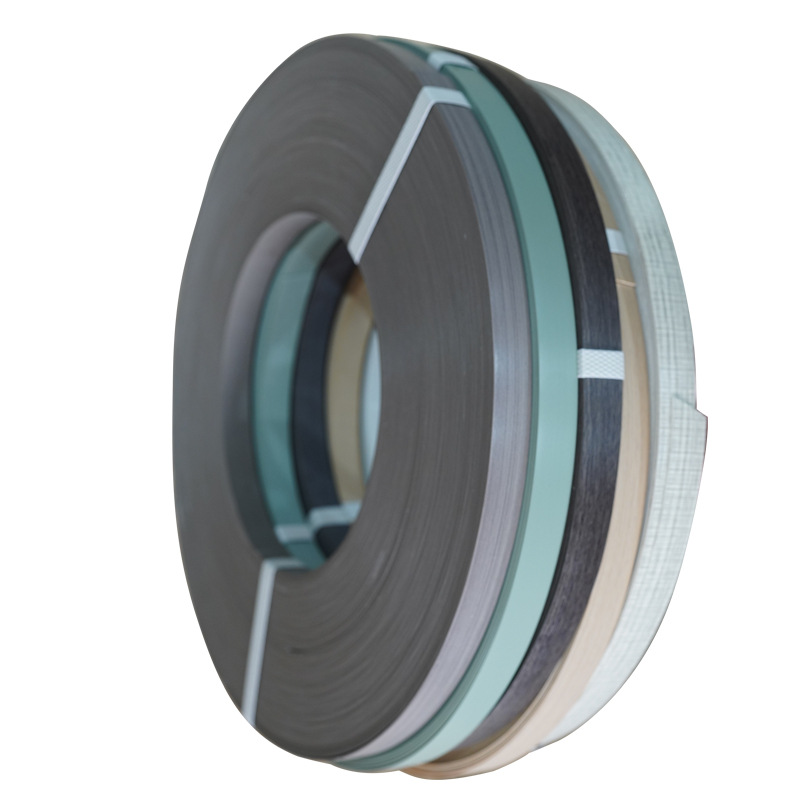
PVC (Polyvinyl Chloride) and ABS (Acrylonitrile Butadiene Styrene) are the two most common materials used for edge banding in cabinetry, furniture, and interior design.
While they may look similar on the shelf, their performance, durability, and aesthetics differ significantly. Below is a detailed comparison to help you decide which is best for your project.
Quick Comparison Table
| Feature | PVC Edge Banding | ABS Edge Banding |
|---|---|---|
| Material | Thermoplastic polymer (vinyl) | Thermoplastic polymer (rubber/plastic blend) |
| Appearance | Good, but "plasticky" look. | Superior, high-end, wood-like texture. |
| Flexibility | Very flexible (good for curves). | Stiffer (better for straight edges). |
| Durability | Prone to yellowing; burns easily. | UV resistant; withstands heat/scratching. |
| Post-Forming | Excellent (down to 15mm radius). | Limited (minimum 50mm radius). |
| Recyclability | Poor (contains chlorine; hard to recycle). | Excellent (100% recyclable). |
| Cost | Lower (Economical). | Higher (Premium). |
| Best For | Budget projects, curved surfaces, mass production. | High-end furniture, kitchens, office cabinets. |
1. Aesthetics & Finish
- PVC: While it comes in many colors and wood grains, PVC often has a distinct "plastic" sheen. It can be difficult to match the exact texture of real wood veneer or laminate.
- ABS: This is where ABS shines. It accepts texture much better than PVC. It can be manufactured with deep wood-grain textures that look and feel almost identical to solid wood. It is the preferred choice for high-end furniture where a "real wood" appearance is desired.
2. Durability & Resistance
Heat Resistance:
- PVC: Softens and chars easily. If you use a router bit that spins too fast or a laser printer near the edge, PVC will burn, leaving an ugly black mark that cannot be removed.
- ABS: Withstands higher temperatures. It can be trimmed with high-speed tools without burning and is resistant to heat damage from appliances or sunlight.
- PVC: Over time, especially in sunlight, PVC will yellow. This is a major issue for white or light-colored cabinets.
- ABS: Is highly resistant to UV light and does not yellow, keeping white cabinets looking white for years.
- Yellowing (UV Resistance):
- Impact Resistance: ABS is generally harder and more scratch-resistant than PVC, making it ideal for high-traffic areas like kitchens and office desks.
3. Flexibility & Application
- PVC: It is very soft and flexible, especially when heated. This makes it the only practical choice for curved edges (like rounded countertops or curved cabinet fronts). It can be bent to a very tight radius (down to 15mm).
- ABS: It is stiffer and has a "memory." It wants to stay flat, so it is not suitable for tight curves. It is best used on standard 90-degree straight edges.
4. Health & Sustainability
- PVC: Contains chlorine. When burned, it can release harmful fumes. It is not easily recyclable and is generally considered less eco-friendly.
- ABS: Does not contain chlorine. It is fully recyclable and considered safer for indoor air quality, which is why it is often specified for hospitals and high-end commercial projects.
5. Cost
- PVC: Is significantly cheaper. It is the industry standard for budget furniture, ready-to-assemble (RTA) cabinets, and large commercial builds where cost is the primary driver.
- ABS: Costs more due to the raw material price and manufacturing process. The price difference is usually justified for visible, high-use surfaces.
Which One Should You Choose?
Choose PVC Edge Banding if:
- You are working on a tight budget.
- You need to edge a curved or rounded surface (post-forming).
- The furniture will be used in low-traffic areas (e.g., bedroom furniture).
- You are using dark colors where yellowing won't be noticeable.
- Choose ABS Edge Banding if:
- You want a premium, natural wood look and feel.
- The project involves white or light-colored cabinets (to prevent yellowing).
- The furniture will be in a high-traffic area (kitchens, offices).
- You are working with straight edges only.