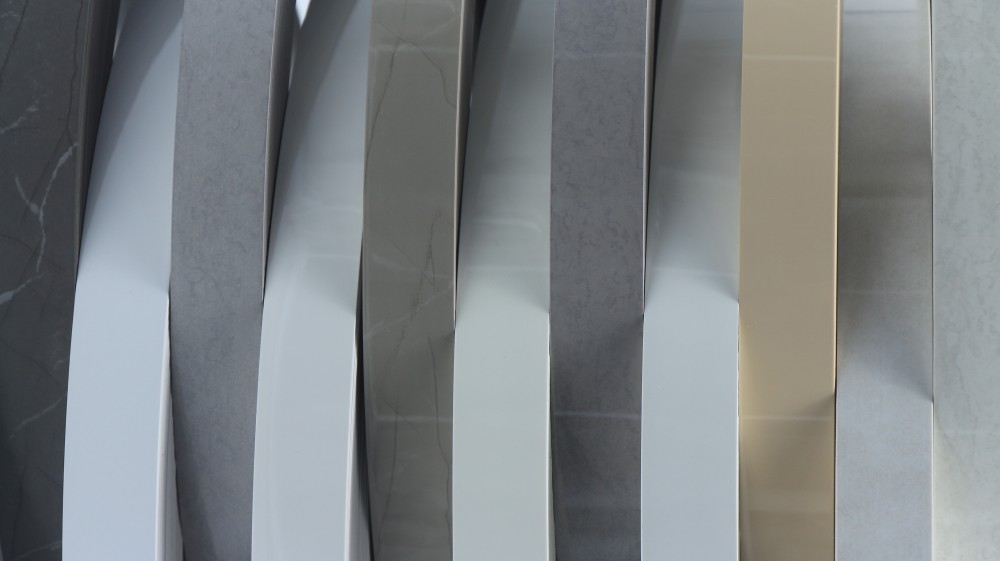
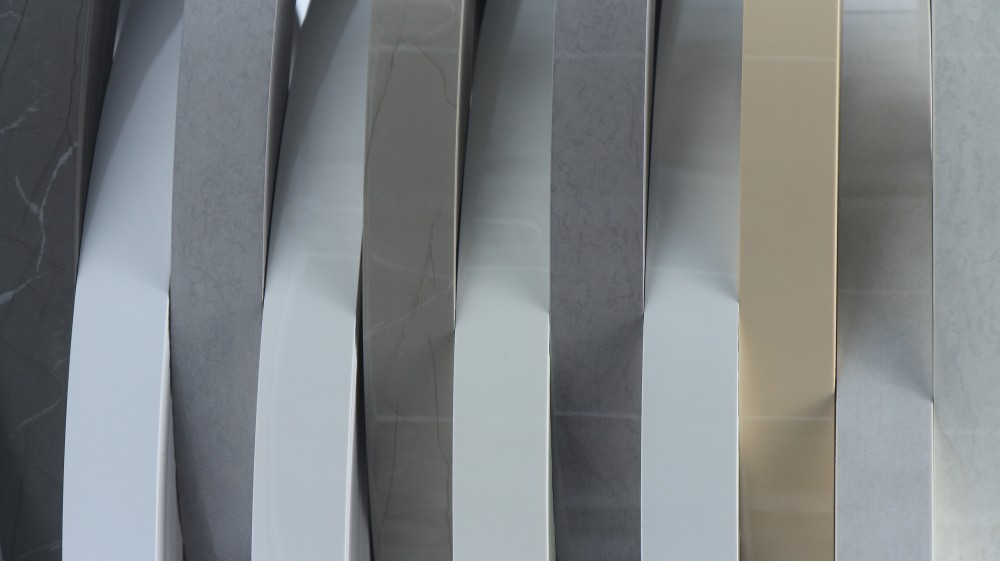
| 1. Aesthetics (Visuals) | Color Matching | • Undertones: Check if the base color is warm (yellow/red) or cool (blue/gray) to ensure it complements the panel. • Batch Consistency: For bulk orders, strictly request the same batch number to prevent color variance. |
| | Texture & Finish | • Grain Synchronization: Wood-grain edge banding must align with the panel's pattern direction. • Surface Sheen: Match the gloss level of the board (Matte, Satin, High-gloss, or Soft Touch). • Embossing: High-quality strips feature physical embossing (tactile feel) rather than just printed texture. |
| 2. Thickness (Physical) | 0.4mm - 0.8mm | • Application: Standard melamine panels, mass-produced cabinetry, and low-impact areas. • Processing: Easy to trim; ideal for automatic edge banding machines. |
| | 1.0mm - 3.0mm | • Application: Office desks, countertops, high-end furniture, or high-traffic zones. • Advantage: Provides structural rigidity and superior impact resistance. • Processing: Requires heavy-gauge machinery and usually requires pre-milling. |
| 3. Material Quality (Durability) | Plasticizers | • Premium: Uses non-toxic/environmental plasticizers (DINP/DOTP). Remains flexible and stable over time. • Low-Grade: Uses cheap phthalates. Prone to yellowing, embrittlement, and surface stickiness. |
| | UV Resistance | • Essential for furniture near windows or outdoors. Ensure the formula includes UV inhibitors to prevent fading. |
| | Composition | • High Calcium (Low Quality): Filled with excessive calcium carbonate; brittle and leaves white ash when burned. • Virgin PVC (High Quality): Pure formulation; flexible and burns with a distinct green flame (HCl). |
| 4. Backing System (Adhesion) | Primer Coating | • A special primer layer is required on the back to activate the glue and ensure a permanent bond. |
| | Hot Melt Glue | • EVA/PO Glue: Most common pre-glued type. Verify the Melt Flow Index (MFI) matches your machine's temperature settings. • Aluminum Foil Backing: A premium feature that blocks moisture and speeds up heat transfer for a stronger bond. |
| 5. Performance (Functionality) | Flexibility | • Test: Bend the strip manually. It should flex without turning white (stress whitening) or cracking. • Usage: Soft PVC is for curved edges; rigid PVC is for straight lines. |
| | No "Ghosting" | • When trimmed, the cut edge should not reveal a white inner core (unless the color is white). This indicates good color penetration. |
| 6. Premium Upgrades (Alternatives) | ABS Edge Banding | • Pros: Formaldehyde-free, paintable, higher heat resistance, and superior edge trimming quality. • Cost: Higher than PVC; used for high-end projects. |
| | Acrylic (PMMA) | • Pros: Features a clear top layer for deep 3D wood grain and excellent scratch resistance. • Usage: High-gloss kitchen doors, luxury retail displays. |